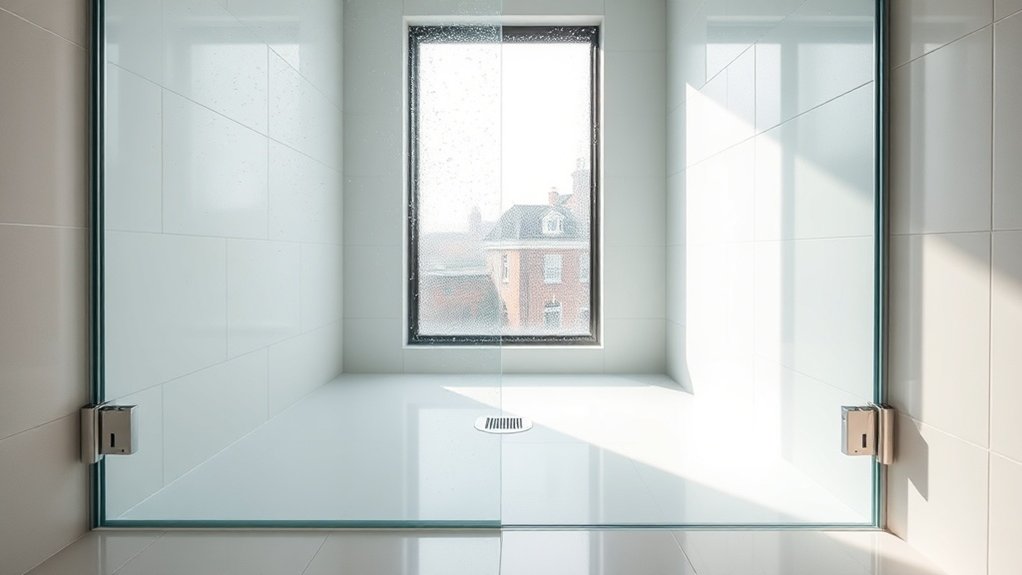
A good shower screen keeps the water where it belongs, protects tiles, grout and the floor beneath, and makes a small bathroom feel bigger because light passes straight through it. We supply and fit shower screens in Camden Park in framed and frameless styles, as sliding, hinged, bi-fold, quadrant and walk-in designs, each sized to your room, your drainage and your brassware. The glass is toughened safety glass, usually 8 or 10 mm, and the fitting is done by our own glaziers so the screen stays rigid and leak-free. Below you will find the choices, typical prices, maintenance advice and the faults we are most often called to fix.
Key insights
- A properly sealed shower screen stops water reaching grout, floors and underfloor heating in Camden Park terraces, flats and period conversions alike.
- Pivot, sliding, bi-fold, quadrant and walk-in screens are all available in 6, 8 or 10 mm toughened glass that meets Part K and BS EN 12150.
- Frameless designs, tinted or frosted glass and black, chrome or brass hardware let the screen fit awkward footprints and period bathrooms.
- Supply and fit typically runs from around £250 for a framed enclosure to £800 or more for frameless, bespoke or smart-glass options.
- Choose a local fitter who can show a portfolio, a written warranty and a clear method for waterproofing, ventilation and levelling.
Why Shower Screens Are Popular in Camden Park
Camden Park has a lot of small bathrooms: narrow terraces, flats carved out of larger houses, and period homes where the bathroom was squeezed in later. A glass shower screen suits all of them because it defines the wet zone precisely. Spray stays inside, so grout lines, timber floors and underfloor heating are spared the slow damage that a curtain allows.
A curtain also traps steam against the wall; a screen lets it move. With the enclosure defined, moist air drifts towards the extractor fan or trickle vent instead of settling on paintwork and joinery, so there is less condensation and mould. The fixed zone has another benefit: a low-flow shower head aimed within the screen footprint uses less hot water than a wide spray that has to be caught by a curtain. Minimal framing and clear glass then let daylight travel across the room, which is why so many compact bathrooms in Camden Park look larger after the screen goes in.
How to Choose the Right Shower Screen
The right screen is the one that fits the way your bathroom is built and used. Before looking at styles, plot the door swing, the clearances to the basin and WC, and where the pipework and waste sit, so the glass lines up with the drainage, the extractor and solid fixing points in the wall.
Glass thickness follows usage. For a family bathroom, 8 or 10 mm toughened glass with an easy-clean coating gives the strength and the low upkeep you want. Spend on hinges, seals and wall profiles, because those are the parts that fail first on cheap screens.
Think about the brassware at the same time. A screen sized around the spray pattern of your shower head keeps water inside, and matching the hardware finish to the taps, the towel rail and the frame colour gives the room a coherent look that will not date quickly.
Main Types of Shower Screens in Camden Park
Knowing the main types makes the first conversation with a glazier much quicker. A pivot door fits a standard recess and gives the widest clear opening, which matters if someone in the household may need step-in access later. Sliding and bi-fold screens open without swinging into the room, so they suit the tighter bathrooms common across Camden Park.
For an open-plan or wet-room layout, a fixed walk-in panel with a ceiling-mounted rain head looks clean and needs almost no hardware. If you want a spa feel, a fully enclosed cubicle can be detailed as a steam room with sealed joints and full-height glass. Corner quadrants round off an awkward corner, ease the route around the room and still look deliberate rather than a compromise.
Framed vs Frameless Shower Screens
Framed or frameless is the choice most Camden Park customers find hardest, because it affects the look, the cleaning routine and the long-term behaviour of seals, hinges and coatings. The next three sections compare the two on appearance, on durability and upkeep, and on cost, value and how easily each fits into an existing bathroom.
Visual Style And Aesthetics
Both types contain water equally well; they just look very different. A framed screen draws a line around the enclosure. The profile can be powder-coated to match the taps or the window frames, or picked out in black or a metallic shade as a deliberate graphic element in the room.
A frameless screen does the opposite and almost disappears. The glass reads as a single plane, light passes through uninterrupted, and large-format tiles or a patterned feature wall are seen in full. Hardware is reduced to small hinges, a channel and perhaps a bracing bar. In a compact Camden Park bathroom that reduction in clutter is often what makes the room feel calm and contemporary.
Durability And Maintenance
Daily use and daily cleaning test the two systems differently. A framed screen relies on coated aluminium profiles to protect the glass edges and take knocks, which extends its life, but every joint and gasket is somewhere soap and moisture can sit, so the profiles need regular wiping to keep mould and corrosion away.
Frameless screens use thicker toughened glass and far fewer parts, so there is less to fail. The hinges and brackets must be good-quality stainless steel or solid brass to shrug off damp and cleaning products. With no frame to collect residue, limescale has fewer hiding places and upkeep becomes a quick squeegee after each shower rather than scrubbing in corners.
Cost, Value, And Installation
Price, value and the practicalities of fitting matter as much as looks. A framed screen costs less to buy and fit because the glass is thinner and the hardware is standard. A frameless screen costs more for its 8 or 10 mm toughened glass and precision fittings, but it tends to hold its value better, especially in the more expensive Camden Park postcodes where buyers notice such things.
Within each type, compare the grade of the hardware, the glass thickness and any easy-clean coating. Finish affects price too: chrome and polished aluminium are the entry point, while brushed brass, matt black or a bespoke colour cost more and change the character of the room.
A frameless screen needs tighter tolerances, a check that the wall can take the load, and an experienced fitter, which is why it is rarely a job for a general handyman.
Sliding, Hinged or Bi-Fold Shower Screens
Sliding, hinged and bi-fold doors each make the bathroom work in a different way. A sliding door gives long, uninterrupted glass with minimal hardware and runs on engineered rollers, ideal for a linear, low-key look. A hinged door feels more architectural, opens wide and makes stepping in easy. A bi-fold folds back on itself to clear the opening without taking up floor space, which is useful when the door would otherwise hit the WC or basin.
- Sliding: slim tracks, good sealing and an easy pairing with a linear drain and water-saving shower heads.
- Hinged: sturdy hinges, wide clearances and the natural choice for thick premium glass.
- Bi-fold: multi-panel pivots that move smoothly and stay rigid, suiting modern rooms where space is tight.
Space-Saving Shower Screens for Small Bathrooms
A compact Camden Park bathroom needs a screen that uses every millimetre without becoming awkward to live with. Tucking the enclosure into a corner and choosing the right corner configuration frees floor space and improves the route through the room. We then look at whether a folding or sliding door suits the layout better, weighing access against long-term reliability of the mechanism.
Clever Corner Screen Solutions
Layouts across Camden Park vary with the age of the house, but small bathrooms gain most from a corner screen that gives back usable floor without feeling cramped. Placing the shower in an underused corner clears space in front of the basin and keeps the sightline across the room open, which modernises the bathroom on its own.
Hardware and glass should be cut and fitted to millimetre tolerances so the screen seals tightly and protects the adjacent finishes. Options to consider:
- Slim-framed quadrant screens that soften a tight corner and make the room read wider
- Made-to-measure neo-angle layouts that work around existing pipework and alcoves
- Full-height glass braced to the ceiling, which contains steam and keeps the shower warmer
Each can be set out to your tile module, drain position and chosen brassware so the finished enclosure looks planned rather than fitted around obstacles.
Folding and Sliding Designs
Folding and sliding doors stack or glide along the wall line instead of swinging into the room, which is why they are the first choice for tight Camden Park bathrooms, loft conversions and ensuites. You get the whole shower footprint to step into without losing floor area in front of it.
Bi-fold and tri-fold panels use engineered pivots that keep the projection small and the movement controlled, while sturdy wall profiles and magnetic seals keep the assembly rigid and watertight.
Sliding screens run on low-friction tracks, often with soft-close carriages, so they move almost silently. Lining the glass panels up with the tile grid and the brassware creates a continuous surface that makes the whole room feel lighter and larger.
Shower Screen Glass Thickness, Safety and Building Regs
Bathrooms count as a special location for glazing, so the thickness and type of glass in a shower screen are regulated rather than purely a style choice. The relevant rules are Part K of the Building Regulations and the product standards BS EN 12150 for toughened glass and BS EN 14428 for shower enclosures, and they need to be built into the specification from the start rather than checked afterwards.
- 6 mm toughened glass is enough for lighter framed systems and compact cubicles.
- 8 mm is the usual choice: solid feel, strong against impact and suited to minimal hardware.
- 10 mm is for large walk-in panels where rigidity and an uncluttered look are the priority.
Ask for heat-soaked toughened glass with polished edges and good hardware, and the screen in your Camden Park bathroom will look ambitious and still pass any inspection first time.
Clear, Tinted or Frosted Glass: Which Is Best?
Privacy in a Camden Park bathroom shapes both the look and the usability of the shower screen. Clear glass gives the most light and the greatest sense of space, so it suits small rooms and any scheme with tiles worth showing off. It is the right choice where being seen is not an issue and you want a clean, open feel.
Tinted glass softens the view and cuts glare without making the room feel smaller. It works well with modern schemes or in bathrooms that get strong daylight.
Frosted glass offers the most privacy, scattering light while hiding outlines. It is the practical choice for a shared family bathroom or an ensuite where the shower faces a window.
The decision rests on how much privacy you need, how much cleaning you are prepared to do, the style you want and how the room is lit and used.
Black, Chrome and Brass Finishes for Camden Park Bathrooms
With the glass decided, the hardware finish becomes the next big design choice. In current Camden Park bathrooms, black, chrome and brass each bring a distinct look and a different maintenance profile, so they deserve the same thought as the tiles and the taps.
- Black: strong and graphic, ties in with black window frames and radiators, and looks sharp against pale terrazzo, concrete or white tiles.
- Chrome: reflective and bright, bounces light around the room, matches most brassware and is easy to keep clean.
- Brass: warm and tactile, at its best when layered with stone, timber and matt ceramics.
Keep handles, hinges and profiles in one finish, because mixed metals quickly look untidy in a small room.
Bespoke vs Off-the-Shelf Shower Screens
Bespoke or off-the-shelf is one of the decisions that most affects the outcome of a new bathroom in Camden Park. A made-to-measure screen gives full control over the shape, the sightlines and the hardware, which is what an unusual layout, a sloping loft ceiling or a high-end scheme needs. Glass thickness, finish and fittings can all be tuned to the rest of the interior.
A stock screen suits a regular-shaped room and a tighter budget. Lead times are predictable, the components are tried and tested, and the kit coordinates easily with the tray, tiles and brassware. You give up some flexibility in proportion and hardware detail, but you get a pre-engineered package that still looks right with black, chrome or brass fittings.
Shower Screen Installation Process in Camden Park
Fitting a shower screen in a Camden Park home begins with a site check of the wall construction, the levels and the existing plumbing. The installer then marks out the fixings, lines the glass up with the tile joints and design lines, and secures the hardware to the manufacturer's instructions. The last step is sealing every critical junction so the enclosure is watertight and keeps its clean lines.
Initial Site Assessment
Before anything is measured or ordered, a careful site assessment at your Camden Park property makes sure the screen will perform and look as intended. The survey is about how water, space and structure will interact every day, not just the size of the glass.
The installer will check:
- Shower pressure and the position of the head, so the screen contains the spray without restricting flow or comfort.
- The tiles and the substrate behind them, including grout lines and movement joints, so fixings hold without cracking the finish.
- Whether walls, floor and ceiling are plumb and level, since any deviation affects the screen type, the hinges and any custom profiling.
Fitting And Sealing
After the survey, the fitter moves to the installation itself. Levels are checked with a laser, hardware is aligned to the tile joints and low-profile fixings keep the geometry true while preserving the bathroom's lines.
Waterproofing follows at every junction. Wall channels are siliconed in stages, each screw hole is sealed on its own, and the threshold gets a continuous bead so run-off goes back to the tray. Edges are detailed so moisture cannot get trapped behind the profile and feed mould. The door sweep, hinges and seals are then tested with the shower running to confirm smooth movement, a tight close and a finish that will last. We use a sanitary-grade silicone throughout.
Typical Shower Screen Prices in Camden Park
Budget for a shower screen in Camden Park depends mostly on the style. A simple framed enclosure with toughened glass and standard hardware typically costs around £250–£400 to supply. Frameless and minimal-profile screens with polished edges and premium hinges usually sit between £450 and £800, depending on the layout and the glass thickness.
- Bespoke shapes, large walk-in panels and low-iron glass push the price up.
- Recycled aluminium profiles and low-impact coatings typically add a modest premium of around 10–20%.
- Switchable privacy glass, LED-lit profiles or a heated demister can add several hundred pounds, but they bring the screen into line with the rest of a smart home.
Choosing a Reliable Camden Park Supplier and Fitter
When drawing up a shortlist of Camden Park suppliers, check their local track record, their certifications and their reviews. Compare itemised quotes and warranties so you know what is covered on glass, hardware and labour. Then ask about their fitting method: how they level, how they seal and how they deal with walls that are out of true. Those answers predict the quality of the finished installation better than any brochure.
Checking Local Credentials
A shower screen looks like a simple purchase, but how well it works and how long it lasts depend on the people fitting it. You need a Camden Park supplier who understands the load on the wall, the glass specification and how the enclosure interacts with ventilation and water usage.
Look for evidence that they routinely deliver accurate, durable installations:
- Membership of a recognised UK trade body and current public liability insurance.
- A portfolio of local jobs that includes tricky layouts, minimal hardware and screens fitted over underfloor heating or alongside smart controls.
- Technical notes or case studies on fixing into different wall types, sealing methods that prevent mould, and tolerances for frameless screens.
Comparing Quotes And Warranties
With a shortlist in hand, read the quotes line by line rather than comparing totals. Look for the glass thickness, the coating, the hardware material and the sealant system, and ask how each choice contributes to safety, lifespan and a tidy look.
Treat the warranty with the same care. Separate the manufacturer's cover from the installer's, and note the periods for glass, hardware, finishes and sealing. Check the exclusions, which often include impact damage, limescale staining and moving parts, and confirm call-out charges, response times and the replacement policy. Favour firms that put all of this in writing before you pay a deposit.
Assessing Installation Expertise
A good specification and a sharp quote still depend on a competent Camden Park fitter to deliver them. The purchase is as much about alignment, sealing and longevity as about glass, so judge installers on their understanding of structure, ventilation and how materials behave, not price alone.
Look for a supplier and fitter who can:
- Assess the wall substrate, plumb and floor fall before confirming hardware positions and tolerances.
- Specify sealants, fixings and coatings that are compatible with your glass and hardware finish.
- Sequence the work with the tiler and electrician so sightlines, lighting and drainage all come together as one system.
That is how the finished screen ends up matching the one you pictured.
Shower Screen Maintenance Tips
A well-kept shower screen stays clear and keeps doing its job as a water barrier for years. The routine is simple: a quick squeegee after every shower to stop mineral deposits forming, then a weekly wipe with a pH-neutral cleaner to protect the seals, hardware and any coating. Use soft cloths rather than abrasive pads so the glass and edges stay bright.
Match the routine to the materials in your Camden Park bathroom. Toughened glass with a nano-coating needs different care from textured glass, acrylic or anodised aluminium. Check hinges, channels and silicone lines regularly, wipe away any trapped water and make sure the door still moves freely. Open a window or run the extractor after each shower; moving air is the cheapest way to prevent etching, mould and early wear on the fittings.
Common Shower Screen Problems and Fixes
Even a good screen can develop faults over the years, and the ones we see most often in Camden Park homes are leaks, doors that drag or squeak, and stubborn staining that no amount of cleaning shifts. Each has a specific fix that restores performance without spoiling the look of the enclosure.
- Leaks: renew the perimeter seals, re-silicone with a high-modulus sanitary sealant and check that the tray falls towards the waste rather than the door.
- Dragging doors: adjust the hinge tension, re-pack any wall profile that has moved and replace worn rollers with stainless or brass ones.
- Limescale and etching: switch to a pH-balanced cleaner and, when the glass is replaced, upgrade to an easy-clean coated pane.
This service is delivered by our Camden Park glaziers.
Frequently Asked Questions
Can I Install a Shower Screen Over a Freestanding or Roll-Top Bath?
Yes, but it needs more thought than a standard bath screen. The bath must be rigid enough to carry the hinge load, the wall must be sound, and the waterproofing around the bath has to be checked before fitting. A curved or straight bath screen is usually hinged from the wall with a ceiling brace or stabiliser bar to control movement, and custom seals follow the roll-top edge. Keep the hardware minimal and corrosion-resistant and use clear glass so the bath's profile stays the feature of the room.
Do Camden Park Landlords Need Special Shower Screens for Rental Properties?
No special product is required, but the screen must be safe and durable enough to meet a landlord's repairing obligations. That means toughened safety glass to BS EN 12150, secure fixings into the wall, and seals that keep water off the floor so you do not end up with damp claims from the flat below. In Camden Park's rental market, a simple framed or semi-framed screen in chrome with an easy-clean coating is the sensible choice: it resists corrosion, is easy for tenants to look after and cheap to repair between tenancies.
How Do Shower Screens Affect Bathroom Ventilation and Extractor Fan Performance?
A screen changes how air moves through the bathroom. A full-height, tightly sealed enclosure can hold steam inside the cubicle, where the extractor cannot reach it, unless the fan is sized and positioned to compensate. Leaving a gap above or below the glass, or using a profile with a vent, lets moist air flow towards the fan. When planning the layout, line up the screen height, the door swing and the fan position so steam reaches the extraction point quickly rather than condensing on the walls.
Are There Eco-Friendly or Recycled Materials Used in Shower Screen Manufacturing?
Yes. Low-iron toughened glass with a high recycled content is widely available, and some manufacturers now offer panels made largely from recycled glass bonded with low-VOC resins. Aluminium profiles made from post-consumer scrap and powder-coated for durability cut the embodied carbon further. If sustainability matters to your project, ask the supplier for an Environmental Product Declaration and choose fittings that are modular and demountable, so the screen can be adjusted or reused rather than skipped at the next refurbishment.
Can I Add Grab Rails or Accessibility Features Directly Onto a Shower Screen?
Grab rails should not be fixed to a glass screen; the glass is not designed to take that kind of load. Instead, anchor rails into the wall, floor or ceiling and position the screen so the rails sit where they are needed. Where a rail must pass near the glass, a laminated or toughened panel with factory-made fixing points can be specified. A specialist fitter will coordinate the load paths, the sealing and the hardware so the finished enclosure is safe, accessible and still looks tidy.
Summary
You now know the difference between framed and frameless, sliding and hinged, and what a realistic Camden Park price looks like. Choose a reputable local fitter, insist on toughened safety glass and proper seals, and keep the screen clean and ventilated, and it will quietly become one of the best decisions in the room. For a free survey and a fixed quotation for shower screens in Camden Park, give us a call.